A quick reference for your next equation

LaTeX Symbols

Find LaTeX math symbols by name or command. Copy Greek letters, operators, arrows, and more, then try a complete example in the image converter.

Search, copy a command, or open its example to make an equation image.

Search in English or Chinese, paste a symbol, or enter a LaTeX command. Command names are case-sensitive.

68 symbols

Copy the command; open the example to see it in context.

Alpha

Greek letters

Alpha

\alpha
Usage example
\alpha + \beta = 1
\alpha + \beta = 1
Open example
Beta

Greek letters

Beta

\beta
Usage example
\beta = 1 - \alpha
\beta = 1 - \alpha
Open example
Gamma

Greek letters

Gamma

\gamma
Usage example
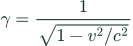
\gamma = \frac{1}{\sqrt{1-v^2/c^2}}
Open example
Delta

Greek letters

Delta

\delta
Usage example
0 < \delta < 1
0 < \delta < 1
Open example
Epsilon

Greek letters

Epsilon

\epsilon
Usage example
0 < \epsilon < 1
0 < \epsilon < 1

Epsilon and varepsilon are distinct glyph variants; keep your notation consistent.

Open example
Variant epsilon

Greek letters

Variant epsilon

\varepsilon
Usage example
\lvert x-a\rvert < \varepsilon

An alternative epsilon shape, often used for small positive quantities.

Open example
Theta

Greek letters

Theta

\theta
Usage example
\sin\theta = \frac{1}{2}
Open example
Lambda

Greek letters

Lambda

\lambda
Usage example
A v = \lambda v
A v = \lambda v
Open example
Mu

Greek letters

Mu

\mu
Usage example
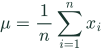
\mu = \frac{1}{n}\sum_{i=1}^{n}x_i
Open example
Rho

Greek letters

Rho

\rho
Usage example
\rho = \frac{m}{V}
\rho = \frac{m}{V}
Open example
Sigma

Greek letters

Sigma

\sigma
Usage example
\sigma^2 = \operatorname{Var}(X)
Open example
Phi

Greek letters

Phi

\phi
Usage example
\phi = \frac{1+\sqrt{5}}{2}
Open example
Omega

Greek letters

Omega

\omega
Usage example
\omega = 2\pi f
\omega = 2\pi f
Open example
Uppercase gamma

Greek letters

Uppercase gamma

\Gamma
Usage example
\Gamma(n) = (n-1)!
\Gamma(n) = (n-1)!
Open example
Uppercase delta

Greek letters

Uppercase delta

\Delta
Usage example
\Delta x = x_2-x_1
\Delta x = x_2-x_1
Open example
Uppercase sigma

Greek letters

Uppercase sigma

\Sigma
Usage example
\Sigma = \operatorname{Cov}(X)

An uppercase Greek letter. Use sum when you need a summation operator with limits.

Open example
Uppercase omega

Greek letters

Uppercase omega

\Omega
Usage example
P(\Omega) = 1
P(\Omega) = 1
Open example
Approximately equal

Relations

Approximately equal

\approx
Usage example
\pi \approx 3.14159
\pi \approx 3.14159

Use for numerical approximations; use sim for similarity or a distribution.

Open example
Similar to / distributed as

Relations

Similar to / distributed as

\sim
Usage example
X \sim N(0,1)
X \sim N(0,1)

Meaning depends on context: similarity, a distribution, or asymptotic equivalence.

Open example
Equivalent / congruent

Relations

Equivalent / congruent

\equiv
Usage example
a \equiv b \pmod{n}
a \equiv b \pmod{n}

Use for an identity or modular congruence, rather than a numerical approximation.

Open example
Less than or equal

Relations

Less than or equal

\leq
Usage example
0 \leq x \leq 1
0 \leq x \leq 1
Open example
Greater than or equal

Relations

Greater than or equal

\geq
Usage example
x^2 \geq 0
x^2 \geq 0
Open example
Much less than

Relations

Much less than

\ll
Usage example
\epsilon \ll 1
\epsilon \ll 1
Open example
Much greater than

Relations

Much greater than

\gg
Usage example
n \gg 1
n \gg 1
Open example
Proportional to

Relations

Proportional to

\propto
Usage example
F \propto \frac{1}{r^2}
Open example
Congruent to

Relations

Congruent to

\cong
Usage example
\triangle ABC \cong \triangle DEF
Open example
Plus or minus

Operators

Plus or minus

\pm
Usage example
x = \pm\sqrt{a}
x = \pm\sqrt{a}
Open example
Minus or plus

Operators

Minus or plus

\mp
Usage example
\cos(a\pm b)=\cos a\cos b\mp\sin a\sin b
Open example
Multiplication

Operators

Multiplication

\times
Usage example
2 \times 3 = 6
2 \times 3 = 6
Open example
Centered dot

Operators

Centered dot

\cdot
Usage example
\mathbf{a}\cdot\mathbf{b}=0
Open example
Square root

Operators

Square root

\sqrt{x}
Usage example
\sqrt{a^2+b^2}
\sqrt{a^2+b^2}

Replace x with your expression; an optional index gives an nth root.

Open example
Fraction

Operators

Fraction

\frac{a}{b}
Usage example
\frac{a+b}{c+d}
\frac{a+b}{c+d}

Replace a and b inside the two brace groups with the numerator and denominator.

Open example
Composition

Operators

Composition

\circ
Usage example
(f\circ g)(x)=f(g(x))

This is a composition operator. A degree symbol is usually written as a superscript circ.

Open example
Right arrow / tends to

Arrows

Right arrow / tends to

\to
Usage example
x \to 0
x \to 0
Open example
Left arrow

Arrows

Left arrow

\leftarrow
Usage example
a \leftarrow b
a \leftarrow b
Open example
Left-right arrow

Arrows

Left-right arrow

\leftrightarrow
Usage example
A \leftrightarrow B
A \leftrightarrow B
Open example
Implies arrow

Arrows

Implies arrow

\Rightarrow
Usage example
x>1 \Rightarrow x^2>1
Open example
Implied by arrow

Arrows

Implied by arrow

\Leftarrow
Usage example
x^2>1 \Leftarrow x>1
Open example
Equivalence arrow

Arrows

Equivalence arrow

\Leftrightarrow
Usage example
x=0 \Leftrightarrow x^2=0
Open example
Up arrow

Arrows

Up arrow

\uparrow
Usage example
a_n \uparrow L
a_n \uparrow L
Open example
Not an element of

Sets

Not an element of

\notin
Usage example
x \notin A
x \notin A
Open example
Subset

Sets

Subset

\subset
Usage example
A \subset B
A \subset B

Some authors allow equality with this symbol. Use subsetneq when strict inclusion must be explicit.

Open example
Subset or equal

Sets

Subset or equal

\subseteq
Usage example
A \subseteq B
A \subseteq B

Explicitly allows the two sets to be equal.

Open example
Superset or equal

Sets

Superset or equal

\supseteq
Usage example
B \supseteq A
B \supseteq A
Open example
Empty set

Sets

Empty set

\emptyset
Usage example
A \cap B = \emptyset
Open example
For all

Logic

For all

\forall
Usage example
\forall x\in\mathbb{R},\quad x^2\geq 0
Open example
There exists

Logic

There exists

\exists
Usage example
\exists x\in\mathbb{R},\quad x^2=2
Open example
Does not exist

Logic

Does not exist

\nexists
Usage example
\nexists x\in\mathbb{R},\quad x^2=-1
Open example
Implies

Logic

Implies

\implies
Usage example
P \implies Q
P \implies Q

Provides more spacing than Rightarrow for logical implications.

Open example
If and only if

Logic

If and only if

\iff
Usage example
P \iff Q
P \iff Q

A spaced double arrow for a necessary and sufficient condition.

Open example
Infinity

Calculus

Infinity

\infty
Usage example
\lim_{n\to\infty}\frac{1}{n}=0
Open example
Summation

Calculus

Summation

\sum
Usage example
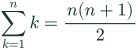
\sum_{k=1}^{n}k=\frac{n(n+1)}{2}

Attach lower and upper limits with subscripts and superscripts.

Open example
Product

Calculus

Product

\prod
Usage example
\prod_{k=1}^{n}k=n!
\prod_{k=1}^{n}k=n!
Open example
Integral

Calculus

Integral

\int
Usage example
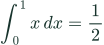
\int_0^1 x\,dx=\frac{1}{2}
Open example
Double integral

Calculus

Double integral

\iint
Usage example
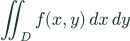
\iint_D f(x,y)\,dx\,dy
Open example
Partial derivative

Calculus

Partial derivative

\partial
Usage example
\frac{\partial f}{\partial x}
Open example
Nabla / gradient

Calculus

Nabla / gradient

\nabla
Usage example
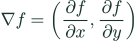
\nabla f=\left(\frac{\partial f}{\partial x},\frac{\partial f}{\partial y}\right)
Open example
Limit

Calculus

Limit

\lim
Usage example
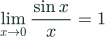
\lim_{x\to 0}\frac{\sin x}{x}=1

Add a subscript to specify the variable and the value it approaches.

Open example
Using symbols

From symbol to equation

A few details that make LaTeX symbols easier to use.

What does Copy command copy?

It copies LaTeX source, such as the command for alpha, rather than a Unicode character or an image. Root and fraction commands include placeholders that you can replace.

How do I turn a symbol into an image?

Choose Open example to load a complete expression into the converter. Edit the formula, choose PNG, JPG, or SVG, and download or copy the result. Rendering and image export happen locally in your browser.

Why do uppercase and lowercase commands differ?

LaTeX command names are case-sensitive. For example, sigma is a lowercase Greek letter, Sigma is its uppercase form, and sum is the summation operator. Search with the leading backslash to match the exact case.

Will every LaTeX package work here?

This directory covers symbols verified with this site’s MathJax configuration. The converter handles math expressions, not complete TeX documents or arbitrary packages. In another LaTeX editor, some commands may require a math package such as amssymb.

How do I find a symbol if I do not know its LaTeX command?

Search by its English or Chinese name, or paste the symbol itself, such as ∞ or ≈. You can narrow the results by category. If nothing matches, reset the filters and try a shorter name. For a symbol with several forms, expand Usage example to check how each form is used.

How do I combine symbols into a complete formula?

Copy the commands you need into the converter and add variables, numbers, and operators, for example \alpha + \beta = 1. When a letter follows a command, separate it with a space: \alpha x produces alpha followed by x, while \alphax is read as a different command. Open example gives you a complete expression to start from.